
Does cultured stone hold back the soil?
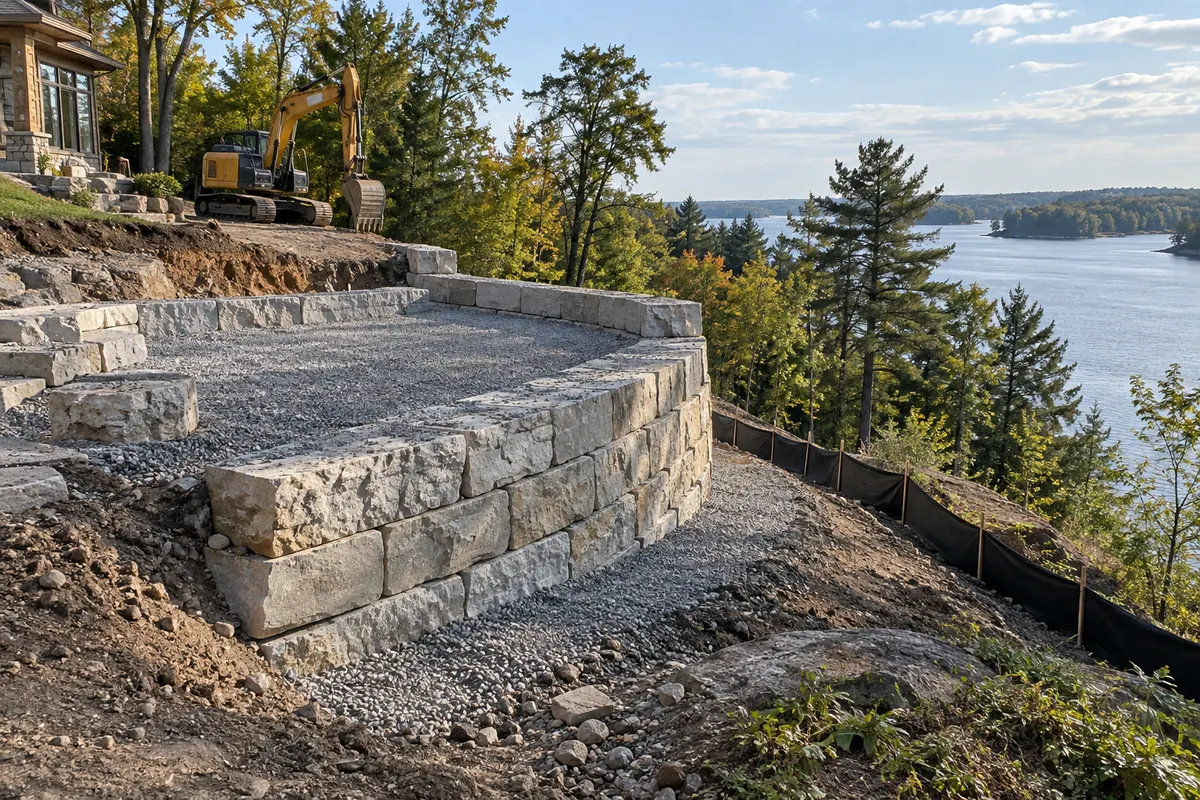
Cultured stone veneer is a decorative facing, not the structure that retains soil. The load must be carried by a suitable concrete or masonry wall designed for the site. That distinction matters on raised patios, entrance gardens, and commercial landscape walls, where a thin stone appearance can hide a much more substantial structure. Attaching veneer to a weak or moving wall will not correct the underlying problem. We first consider the retaining structure, then the compatibility of the finish. Keeping those tasks in the right order helps avoid paying for attractive facing that later cracks or separates as the wall moves.
Where is cultured stone facing a good choice?
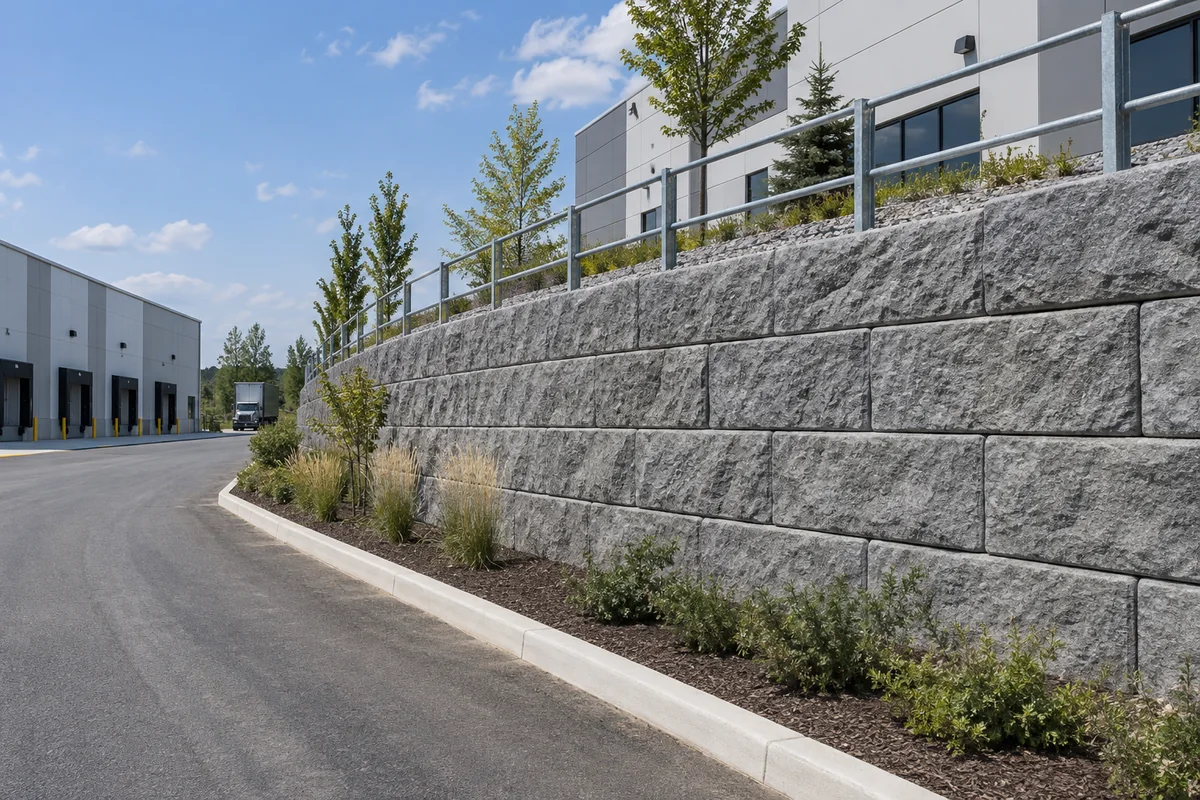
Cultured stone facing can suit a dry, visible retaining wall beside a terrace, entrance, courtyard, or raised garden. The finish offers a more detailed stone appearance than plain concrete and can relate to the colours of a house or commercial building. Product suitability depends on exposure, substrate, and manufacturer guidance. A face that stays wet or receives heavy de-icing salt needs particular attention. Choosing a finish only by its showroom appearance can lead to staining or premature damage outdoors. We review the wall's use and exposure before comparing profiles, colours, mortar joints, and cap details.
Why does water management matter behind the facing?
Water management matters because moisture can move through a retaining wall and carry dissolved minerals toward the veneer. Persistent wetting can cause visible deposits and stress the finish through seasonal freezing. The structural wall needs its own drainage and soil-side moisture protection, with facing details suited to the selected product. Manufacturer guidance also discusses drainage layers behind the veneer in appropriate assemblies. Covering damp concrete without addressing the moisture source leaves the cause in place. We treat the wall and its finish as a coordinated assembly, so water is managed before the decorative surface is installed.
What should the cap and wall edges look like?
The cap should protect the top of a cultured stone faced wall and shed water away from the exposed face. Poorly detailed tops can allow repeated wetting into joints and behind the veneer. Corners, ends, and transitions to steps also need a clear finish plan so thin facing does not look unfinished or vulnerable at an edge. We discuss the cap material, overhang, joint layout, and any changes in height before installation. The goal is a complete wall detail rather than a surface treatment alone. On commercial properties, edge durability also matters where maintenance equipment or pedestrian activity comes close to the wall.
Can an existing retaining wall receive cultured stone?
An existing retaining wall may accept cultured stone only if its structure, surface, and moisture conditions are suitable. Cracks, leaning, loose coatings, or persistent dampness need investigation before cladding is considered. A finish cannot be expected to bridge ongoing movement or improve a failing foundation. The preparation may include removing incompatible material and establishing an approved bonding or attachment system. Some walls are better replaced before finishing. We discuss the condition of the existing wall and the reason for changing it, so you can compare a facing project with a full replacement instead of hiding a problem that will return.
How does residential work differ from commercial facing?
Residential cultured stone work often focuses on matching a home, patio, or garden, while commercial facing must also consider public use and maintenance. Salt exposure near walkways, snow storage, irrigation, and contact from equipment may all affect the finish choice. A busy entrance can require staged access and protection while mortar and other materials cure. If those conditions are ignored, the appearance may deteriorate or the work may interrupt normal use. We define the intended use, material details, and work area before pricing. Both residential and commercial installations need a sound structural wall and a finish assembly appropriate to its exposure.
What belongs in a cultured stone wall quote?
A cultured stone wall quote should identify whether it includes the structural wall, surface preparation, moisture details, facing, corners, coping, and restoration. Quoting only the visible face can leave major parts of the work unresolved. The wall's dimensions and condition, access, selected profile, and joint style all influence labour and materials. Send the Cornwall-area property location, the approximate wall size, and whether the wall is new or existing. Include the look you want to coordinate with, such as brick, paving, or natural limestone. We can discuss suitable options and the next steps for a clear estimate.
Discuss your project
Share the location, scope, timing, and any site conditions that may affect the work.